

The federal rules require a cleanable outcome. They do not specify a steel grade or a surface finish. Knowing which is which changes how you write a spec.
Most vendor pages on sanitary conveyor design open by citing a regulation and then quoting a surface roughness number, as though the second came from the first. It usually did not. Understanding where each requirement actually originates is what lets you write a specification a fabricator can be held to.
What the binding rules actually say
For FDA-regulated facilities, 21 CFR 117.40 is the operative section. Its language on conveying equipment is an outcome requirement: holding, conveying and manufacturing systems must be of a design and construction that enables them to be maintained in an appropriate clean and sanitary condition.
For USDA-inspected meat and poultry plants, 9 CFR 416.3 covers equipment and utensils in similar terms.
Notice what is missing. Neither one tells you 304 versus 316 stainless, a Ra value, or an IP rating. They tell you the equipment has to be cleanable and let the inspector judge whether it is.
Where the numbers come from
The specific figures most people quote come from voluntary consensus standards. For mechanical belt conveyors handling exposed product in meat and poultry, the relevant document is NSF/ANSI/3-A 14159-3. Per USDA AMS guidance published in February 2026, 14159-1 explicitly excludes belt conveyors, so citing the wrong number in a spec is a common and avoidable error.
The Meat Institute's ten principles of sanitary design are the other widely used reference, and they are written in plain enough language to hand to a fabricator.

The construction details that decide cleanability
Whether a conveyor can actually be cleaned is usually decided by a handful of build decisions:
- Hollow tube sealed with continuous welds, not stitch welds, not caulk
- No lap joints, and no caulking in or above the product zone
- Fasteners avoided in the product zone wherever the design allows
- Belt scrapers that come out as one piece, without tools
- Framework that drains rather than holding water
- Belt tension releasable without tools, so the belt can actually be lifted for cleaning
None of these are exotic. They are just difficult to retrofit, which is why they belong in the drawing rather than the punch list.
Clearances get designed out and never come back
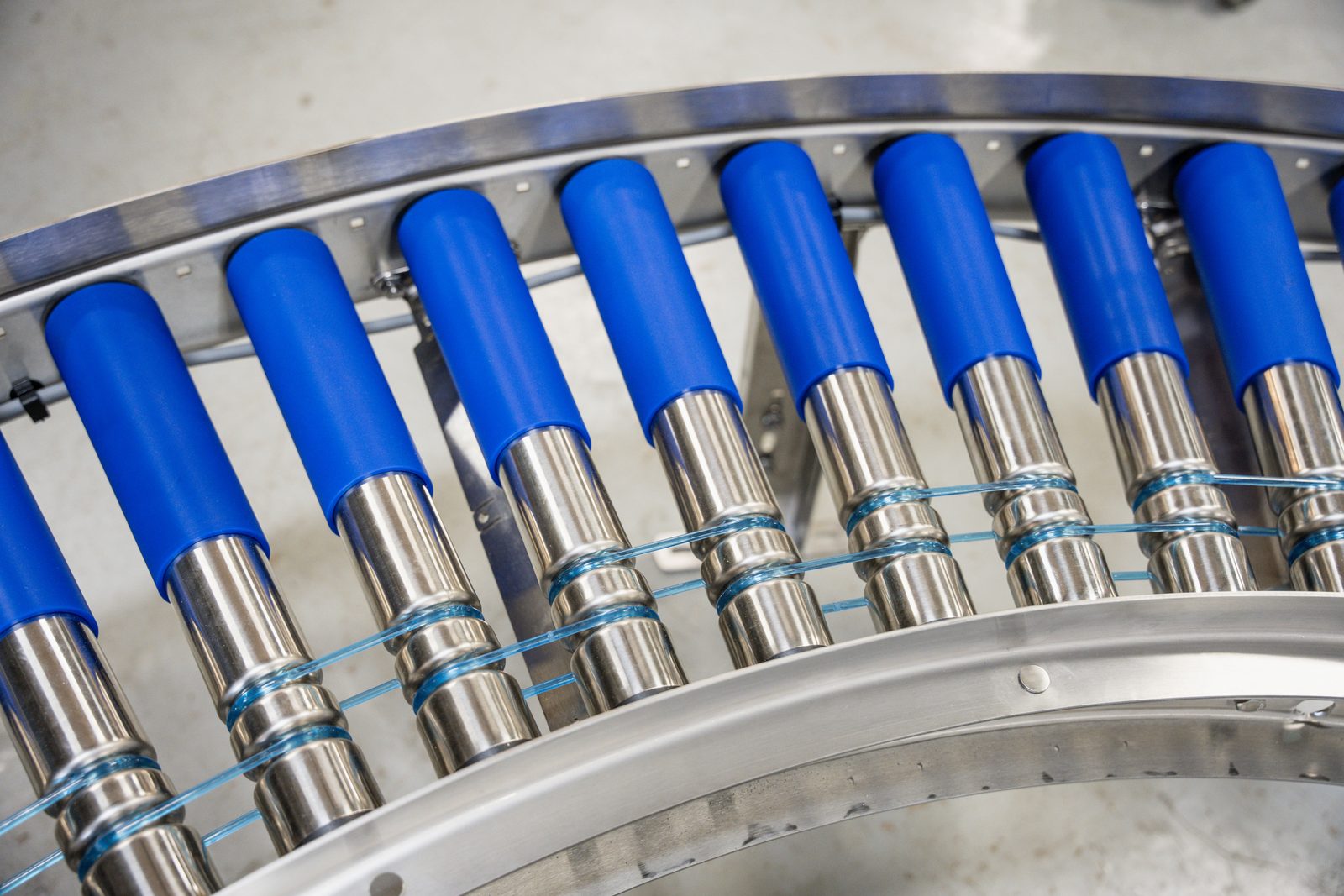
The single most expensive sanitary mistake is not a material choice. It is layout. Clearance under and around a conveyor determines whether a sanitation crew can reach the surfaces at all. Once the line is packed into the available floor space, that clearance is gone, and no amount of stainless recovers it.
USDA equipment acceptance is voluntary, and useful anyway
USDA acceptance of equipment is a voluntary, fee-based service through the AMS Dairy Grading Branch, not a mandate. But USDA's own guidance encourages buyers to require it: equipment buyers are encouraged to request USDA DGB acceptance of equipment as a provision of a purchase contract. Accepted equipment is re-validated every four years.
If sanitary performance matters enough to argue about later, it is worth putting in the contract now.
What to ask a fabricator for in writing
USDA's drawing requirements are a good template for what a specification should contain regardless of who is inspecting you:
- Materials of construction for each part
- Minimum radii of internal angles less than 135°
- Product-contact surface finish specifications
- Weld and permanent-joint specifications
- Material certifications for plastic and rubber product-contact parts
A shop that builds sanitary equipment routinely will not blink at any of that. A shop that does not will negotiate.
One more thing worth tracking
Separately from design: FDA's Food Traceability Rule under FSMA Section 204 now has a compliance date of 20 July 2028, extended from January 2026 by roughly 30 months. FDA has stated it intends to comply with the Congressional directive not to enforce before that date. The substance of the requirements did not change, only the deadline. If traceability was shaping your equipment and data plans, the timeline moved, not the target.
System Technology builds conveyors and packaging equipment for food, bakery, frozen, pharmaceutical and powder applications, in mild steel and stainless, with fabrication done in our own shop in Joliet. If you are writing a sanitary spec and want it reviewed by people who will have to build to it, send it over.
Sources
- eCFR: 21 CFR 117.40
- eCFR: 9 CFR 416.3
- USDA AMS: Guidelines for the Sanitary Design and Fabrication of Meat and Poultry Processing Equipment (February 2026)
- FDA: FSMA Food Traceability Rule, compliance date extended to 20 July 2028
- North American Meat Institute: 10 Principles of Sanitary Design