Most lines need three or four different conveyor types. Picking by habit instead of by section is where throughput and sanitation problems start.
A packaging line is not one conveyor. It is usually four or five different conveying problems in a row (carrying loose product, moving sealed cases, accumulating in front of a slow machine, changing direction, gaining elevation) and each one has a type that suits it.
Specifying a single type down the whole line is the most common way to end up with a line that runs but does not run well.
The four you will use most
| Type | Suits | Watch for |
|---|---|---|
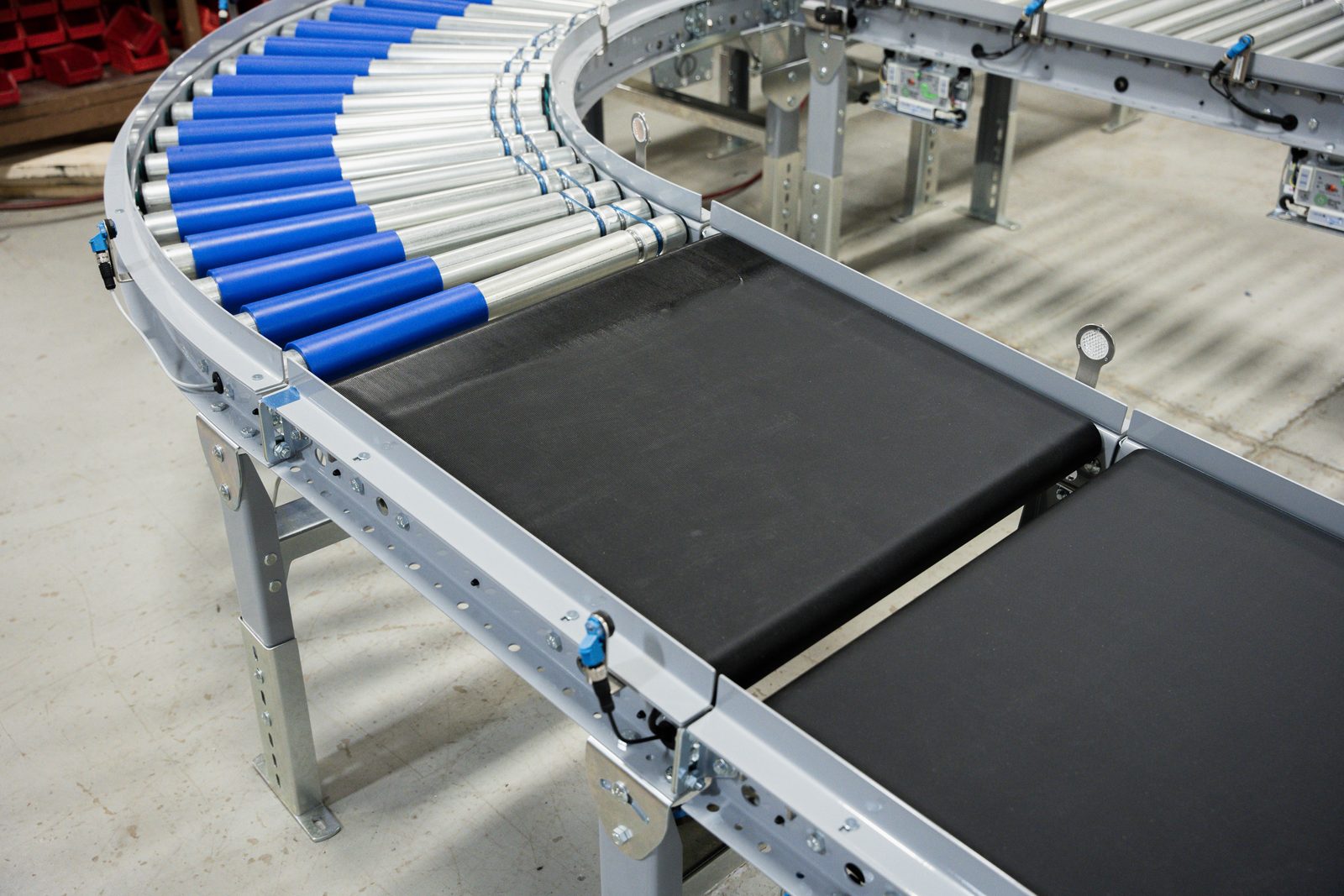
| Modular plastic belt | Product-contact runs, wet and washdown areas, curves and inclines, food and bakery | Belt cost is higher; needs the right support and cleaning access |
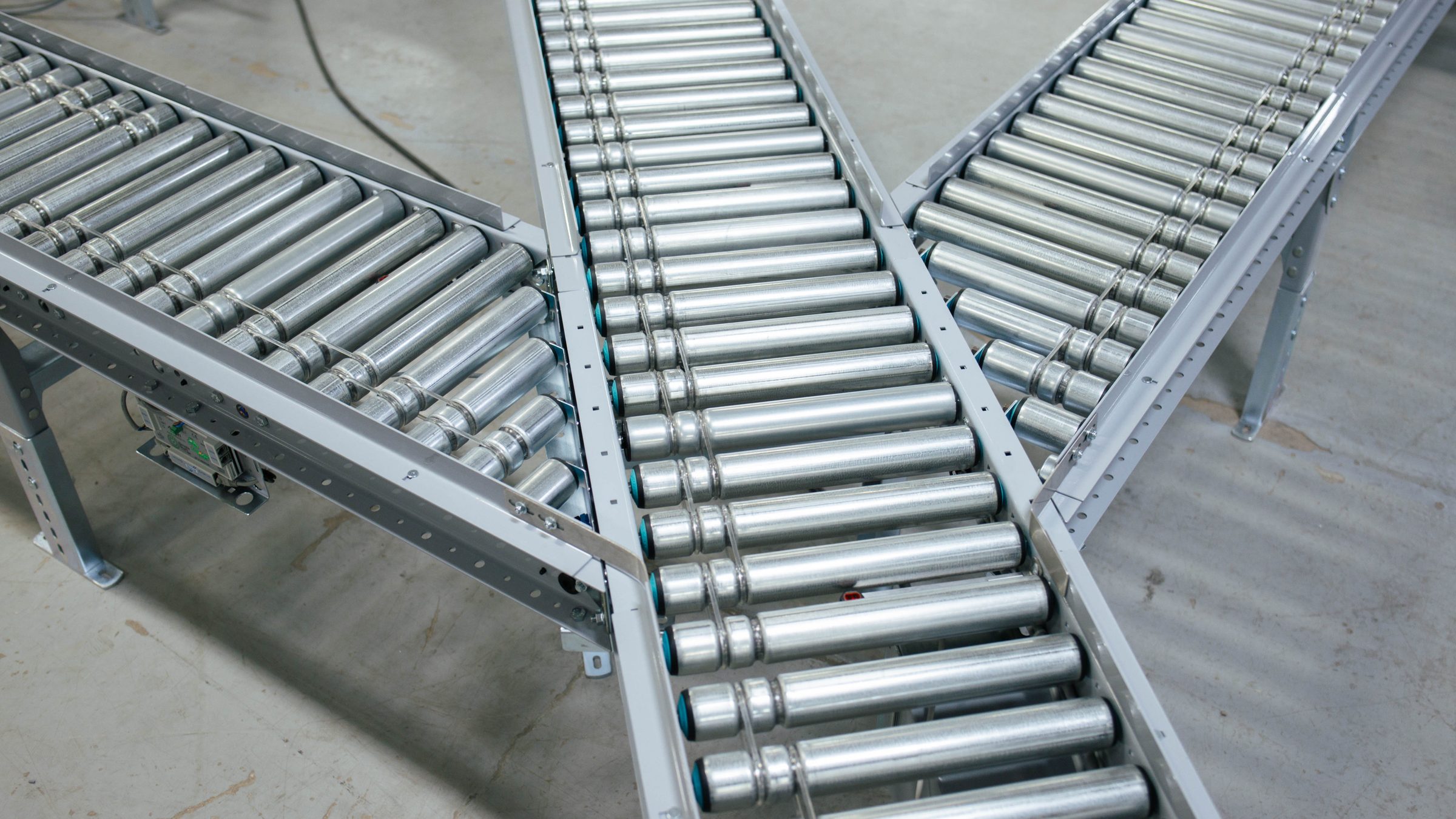
| Powered roller (24V DC) | Cases and totes, zoned accumulation, sections that must start and stop independently | Needs a firm, flat-bottomed load; not for loose or small product |
| Slider bed belt | Simple straight transport of cases and bags, quiet runs, low cost per foot | Sliding friction; less suited to heavy accumulation |
| Accumulation (roller or V-belt) | Buffering in front of a slower machine, absorbing stoppages | Choose zero-pressure or minimum-pressure deliberately, not by default |
Match the type to the section, not the line
Before the product is in a case
Loose, wet or small product wants a continuous surface. Modular plastic belt handles curves, inclines and washdown, and it takes the washdown detailing that food and bakery plants need. This is also where a vertical belt conveyor earns its place when product has to gain elevation without a long incline run: sidewalls integrated into the belt and scoops spaced to the product keep it from rolling back.
Once product is in a case
Now you have a flat, firm bottom, and the options open up. Slider bed is the cheapest reliable way to move a case in a straight line. Powered roller comes into its own when you need zones that stop independently. Each zone can hold a case without the one behind it driving into it.
Where the line has to buffer
Accumulation is its own decision and it is covered properly in a separate article. The short version: a roller accumulator and a V-belt accumulator solve the same problem with different mechanics, and the choice usually comes down to product weight, back pressure tolerance and washdown requirements.
Where the line changes direction or elevation
Right-angle transfers and multi-directional transfers handle the turn. A multi-directional transfer will move product through a right-angle transfer while changing orientation, or rotate a case in place while keeping its leading edge, useful when a case has to enter a machine a specific way round. Vertical lifts handle elevation change in a fixed footprint.
Three questions that decide most of it
- Is the product in a container yet? If not, you want a continuous surface. This single question eliminates half the options.
- Does the section get washed down? If yes, the frame material, drainage and belt removability matter more than the conveying mechanism.
- Does this section need to stop while the one behind it keeps running? If yes, you need zoned control, and that pushes you toward powered roller or a proper accumulator.
The mistakes that show up at startup
- Specifying one type end to end because it was easier to quote. The line runs, but sanitation or throughput suffers somewhere.
- Sizing accumulation by feel. Buffer length should come from the downstream machine's stoppage behaviour, not from the space that happened to be left over.
- Leaving no clearance for cleaning in a washdown zone, a layout decision that cannot be fixed later.
- Ignoring how product enters the next machine. Orientation and spacing at the handoff decide whether the machine downstream runs at rate.
Specify by section
The practical approach is to walk the line as a series of handoffs and decide each one on its own terms: what is the product doing here, what does the next machine need, and what has to happen when something stops. The conveyor type follows from that.
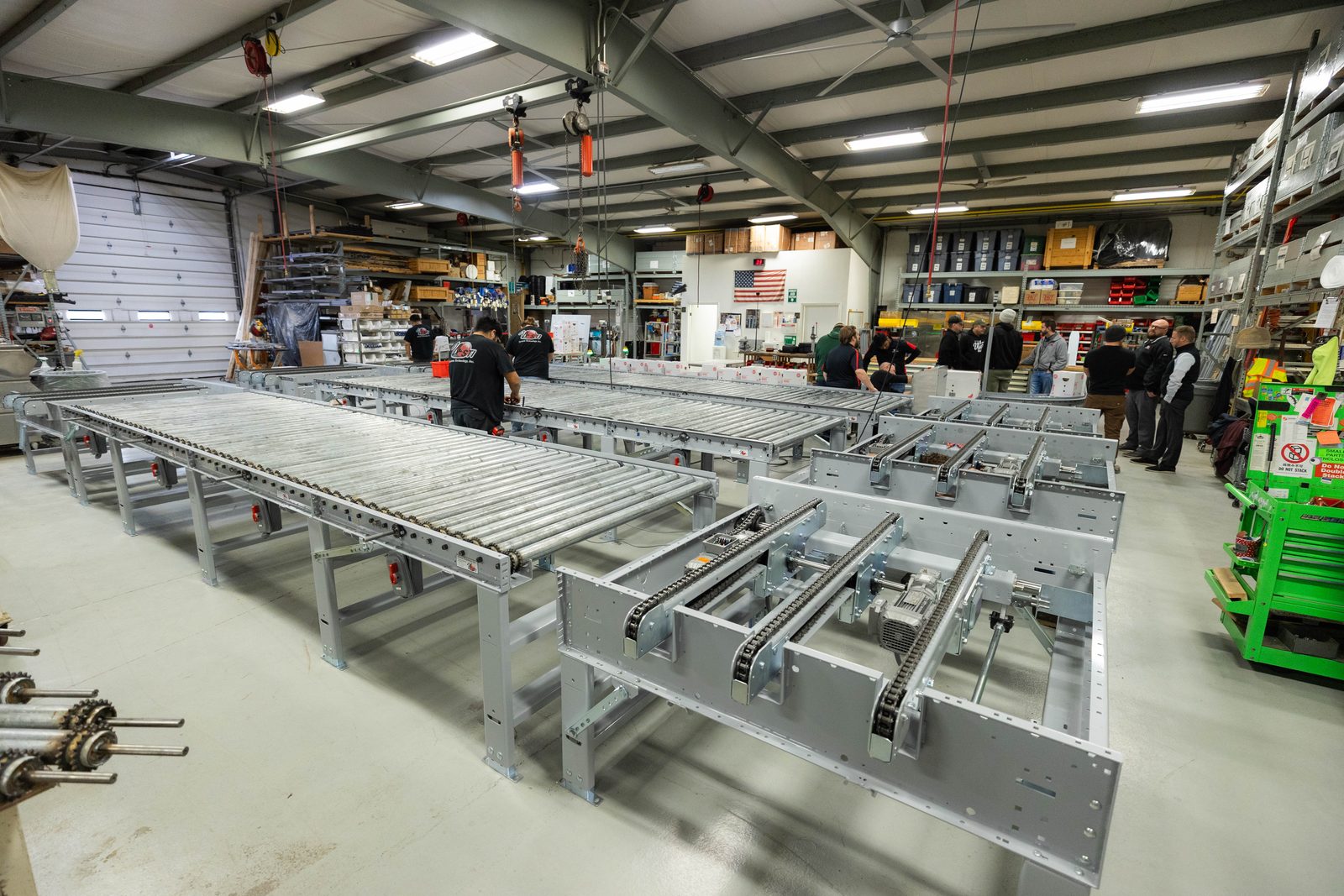
System Technology builds all of these types (modular plastic belt, powered roller, slider bed, roller and V-belt accumulation, transfers, vertical lifts) in our own shop in Joliet, which means a line can mix types without mixing vendors. If you want a second opinion on a layout, send us the product, the rate and the footprint.